STATE & LOCAL GOVERNMENT

Make services easier to access, harder to exploit

IDMe creates one digital front door to participating state and local services, giving residents a reusable, confirmed identity they can carry from one program to the next. Agencies can catch identity fraud earlier, reduce duplicate work, and give eligible residents more secure ways to verify.
Talk to Sales
Chosen for essential public services
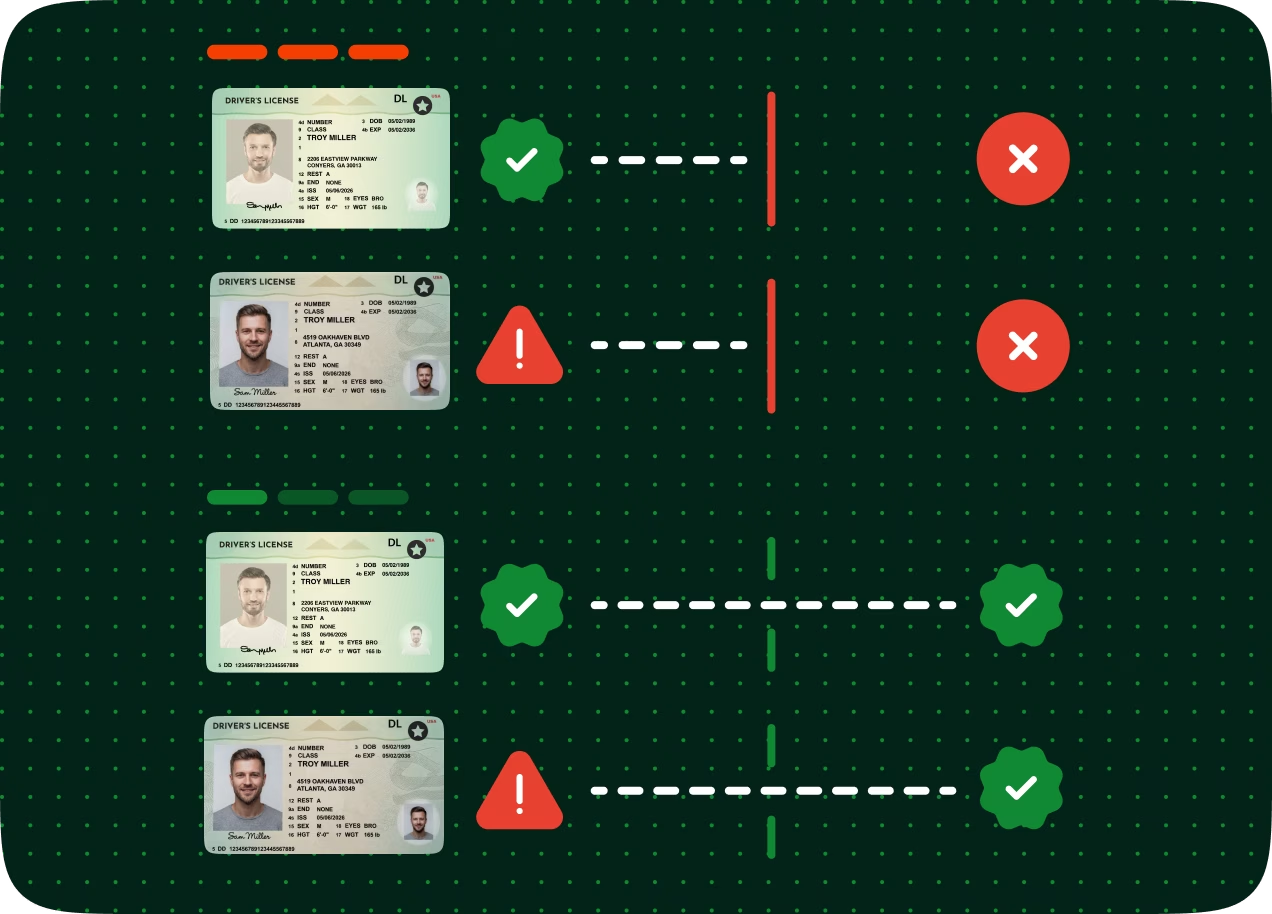
Comparison of two Georgia driver's licenses with the same personal details but different photos: left license photo is different from the smaller ID photo below it and has a warning icon; right license photo matches the smaller ID photo and has a green checkmark.
The trade-off

Fraud checks can stop legitimate residents too

State agencies have to do two things at the same time: stop fraud, and keep eligible residents moving. Automated-only checks can't do both. Tighten those checks enough to catch fraud, and legitimate applicants with thin files start getting routed into your call center or field office instead of getting the benefits they qualify for.
Our approach

Modernize your digital front door

IDMe gives residents a reusable digital identity they can carry from one program to the next. Agencies get a consistent way to verify identity, help prevent identity-based fraud, and help people who need another path, all without replacing the systems behind each service.

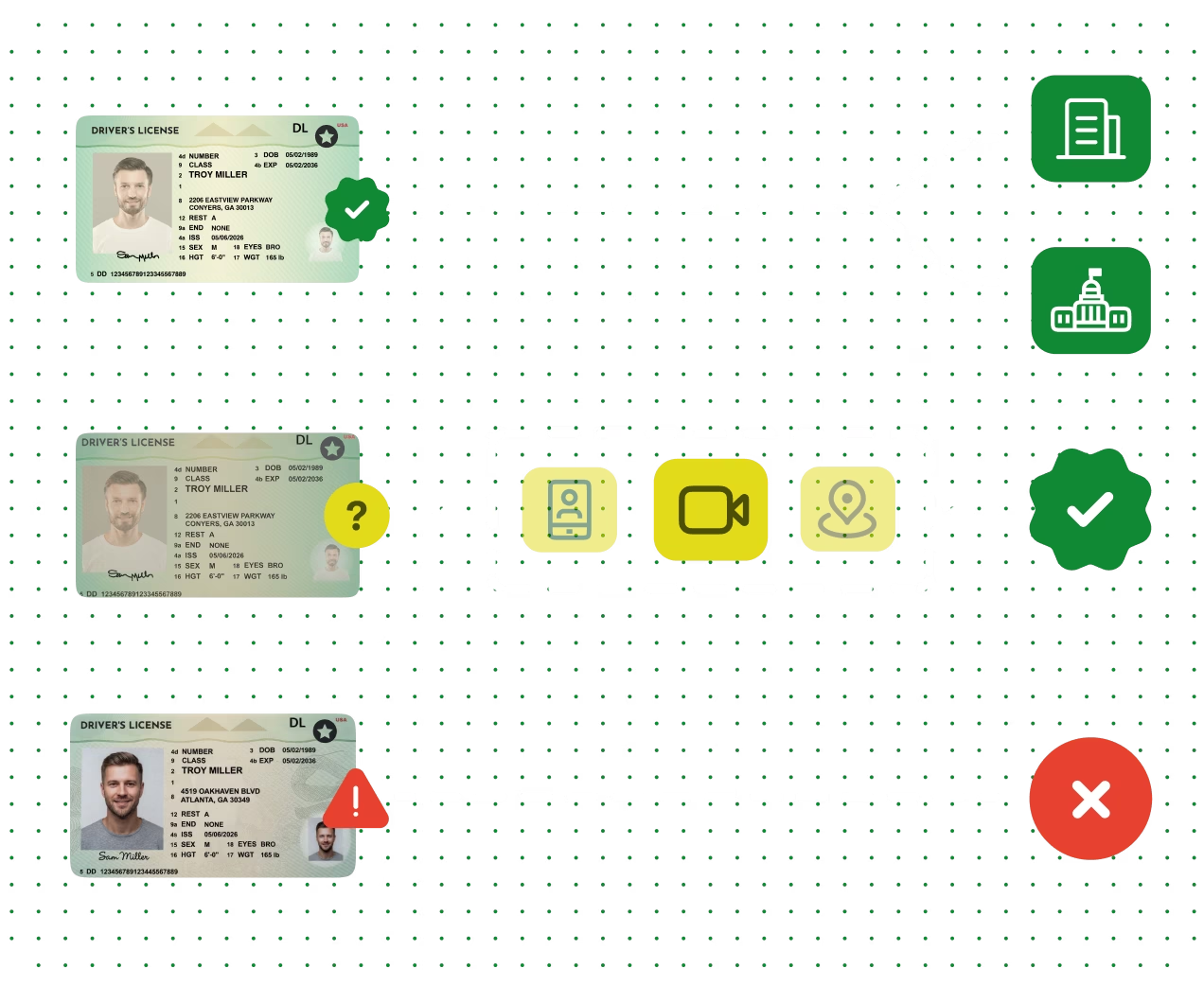
Illustration showing three Georgia driver's license images of Sam Miller with different verification statuses: the top valid license with a green checkmark, the middle one faded with a yellow question mark leading to location and video icons then a green checkmark, and the bottom one marked 'REAL' but linked with a red exclamation point and red cross, indicating invalid or failed verification.

Better access starts with trusted identity

Stop fraud before benefits go out

Verify applicants before payment or manual review, with layered defenses that detect stolen and synthetic identities, bots, deepfakes, and account takeover early.

One identity, with no one left behind

Residents verify once and reuse their IDMe credential across participating programs. Self-service, video chat, and in-person options keep people moving when the standard path doesn’t work.

Free your team to run the program

IDMe absorbs verification work, call center volume, and manual fraud reviews so your staff can focus on eligibility and bringing services to the people who need help.

95M+
US adults
already have an IDMe account for accessing government services portals.
24
Federal agencies
supporting access to tax, Social Security, Veterans, healthcare, and other federal services.
58
State government agencies
used across unemployment, health and human services, revenue, education, retirement, and other essential programs.

How it works

1
Connect without replacing

Integrate IDMe with citizen portals, IAM platforms, and eligibility systems without replacing what you already use.

2
Verify at the first point of need

Residents sign in with an existing credential or verify through self-service identity proofing with layered fraud checks.

3
Give more residents a path through

People who can’t complete the automated path can move to live video chat or in-person verification.

4
Recognize residents across services

Agencies receive the verified data, and residents can return without starting over.

Bring essential services through one digital front door

Health and human services

Connect benefits without creating new barriers

Streamline access to Medicaid, SNAP, TANF, child welfare, and energy assistance, even as new federal rules require states to recheck eligibility more often. IDMe helps prevent duplicate and fraudulent applications so redeterminations don't turn into a backlog.
A female pharmacist in a white coat smiling and showing two medicine boxes to a smiling older woman wearing glasses at a pharmacy counter with shelves of medicines in the background.
Workforce and unemployment

Keep legitimate claimants moving

Protect claims, make return access easier, and reduce the support burden when residents need benefits most, so program integrity funding isn't spent chasing fraud after the fact.
Middle-aged woman with gray-streaked hair in a beige cardigan and black top, sitting at a wooden table, intently looking at a laptop screen with her hand on her chin, with a blurred indoor plant and curtains in the background.
Revenue and tax

Secure every taxpayer interaction

Verify taxpayers, protect refunds, and strengthen account recovery and high-risk transactions.
A focused woman wearing glasses and a patterned shirt uses a calculator while reviewing papers at a wooden desk in a bright room with plants and a window in the background.
Motor vehicles and licensing

Move high-trust services online safely

Secure digital services for driver's licenses, vehicle records, permits, and professional credentials.
Side view of a beige SUV parked on a paved area next to a tree, with power lines and a fence in the background under a clear sky.
Education

Stop ghost students without blocking real ones

Protect enrollment and financial aid from ghost-student and synthetic-identity fraud while giving students an accessible verification path.
A young woman in a light denim jacket points at a laptop screen while a young man in a plaid shirt types, both focused on the laptop, with other people blurred in the background.
Retirement and pensions

Protect benefits earned over a lifetime

Protect member accounts and sensitive transactions such as direct-deposit changes from account takeover and identity fraud.
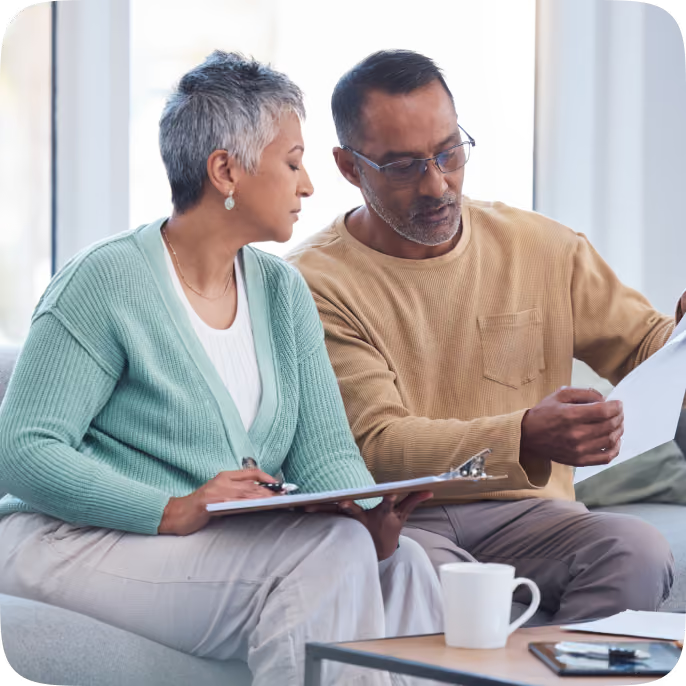
A middle-aged woman with short gray hair and a man with glasses sit on a couch reviewing documents together, with a clipboard and a cup on the table in front of them.

What agencies are saying

“We want our members to know their information is safe with us and that they can get to that information easily.”
Brad Briner
North Carolina State Treasurer

“Our new partnership with IDMe will strengthen our unemployment system… by reducing fraudulent claims and making it easier for claimants to establish their identity.”
Beth Townsend
Executive Director, Iowa Workforce Development

“This is another way the Department is making identity verification accessible for underserved populations—or for someone who simply wants in-person assistance.”

Nancy A. Walker
Secretary, Pennsylvania Department of Labor & Industry
PARTNERS AND INTEGRATIONS

Works across the state technology ecosystem

IDMe works with your existing government platforms, technology providers, and system integrators to bring trusted identity into your workflows.
Explore partners
Logos of technology companies Carahsoft, ServiceNow, and Salesforce displayed with Carahsoft centered above the others on a dotted black background.

Frequently asked questions

How does IDMe work across different state programs?

IDMe gives residents a reusable digital identity credential that participating agencies can accept across their portals. Each agency controls its own service and receives only the identity information needed for that interaction, with the resident's permission.

Do we have to replace our existing portal or identity system?

No. IDMe can integrate with existing citizen portals, IAM platforms, and eligibility systems through standards-based protocols. States can start with one program and expand over time.

What happens when a resident cannot verify online?

Residents can move from self-service to live video chat or in-person verification. These additional pathways give people with thin credit files, data mismatches, limited document access, or other edge cases a secure way to complete verification without relying on agency staff.

How does IDMe help reduce fraud?

IDMe verifies that a person is real and matches the identity they claim, while layered signals help detect stolen and synthetic identities, bots, deepfakes, and account takeover attempts. Agencies can apply stronger checks before benefits, refunds, or sensitive account changes are approved.

How does IDMe protect resident privacy?

Residents control when their verified information is shared. IDMe uses data minimization and consent-based sharing, does not sell personal data, and limits disclosure to the information needed for the service.

How is IDMe different from automated identity verification vendors?

Automated verification can work well for many residents, but it is only one part of the experience. IDMe combines fast self-service with a reusable credential, live-video and in-person options, ongoing account protection, and support, so agencies can improve access and program integrity without pushing every exception back to their own staff.
‍

Related resources

Give residents one trusted way into public services

Connect programs, protect public funds, and make it easier for eligible residents to access the services they need.