





“By embedding IDMe into the request process, we are helping healthcare organizations confirm that records reach the right person while reducing unnecessary friction for patients.”


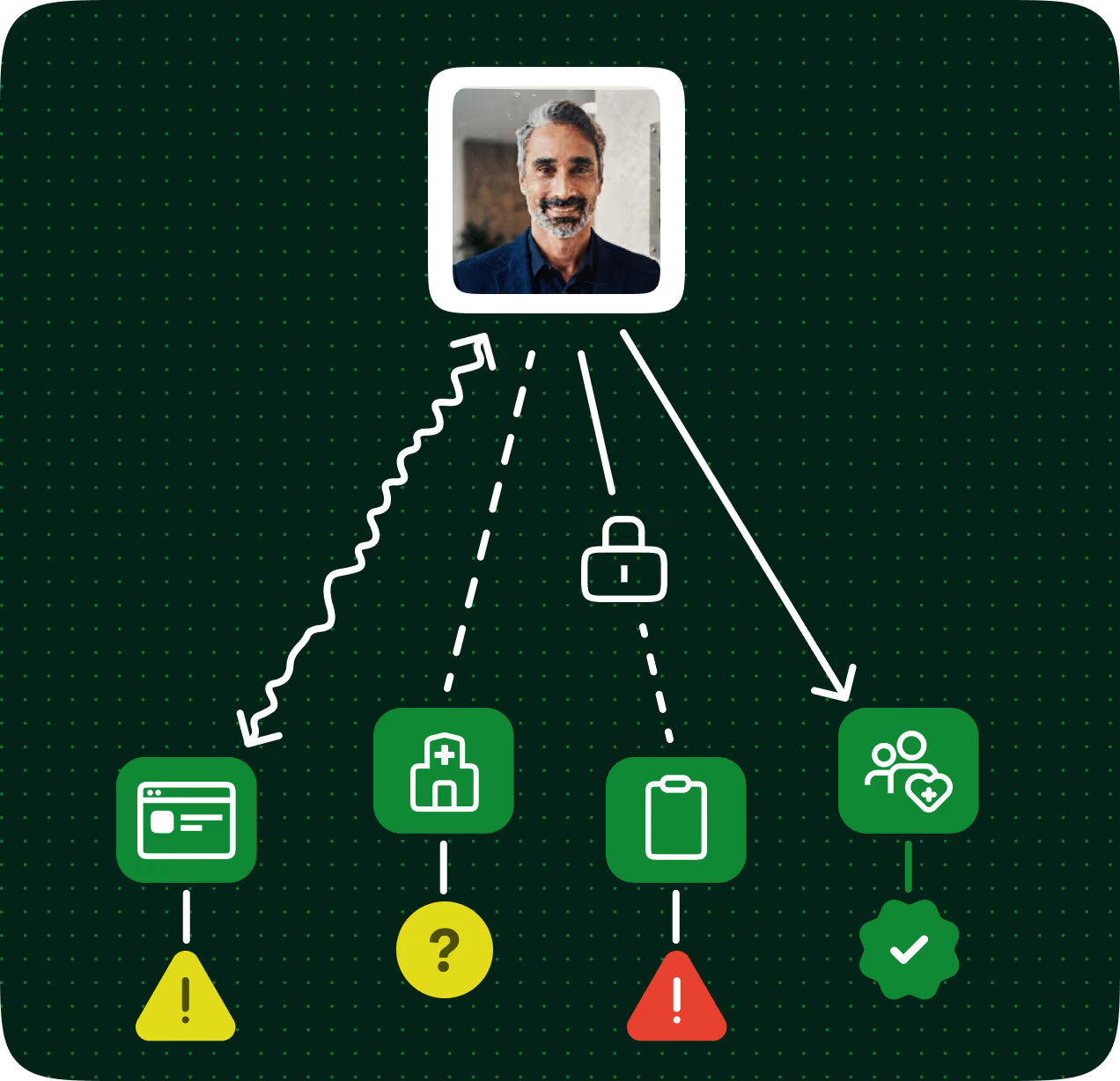
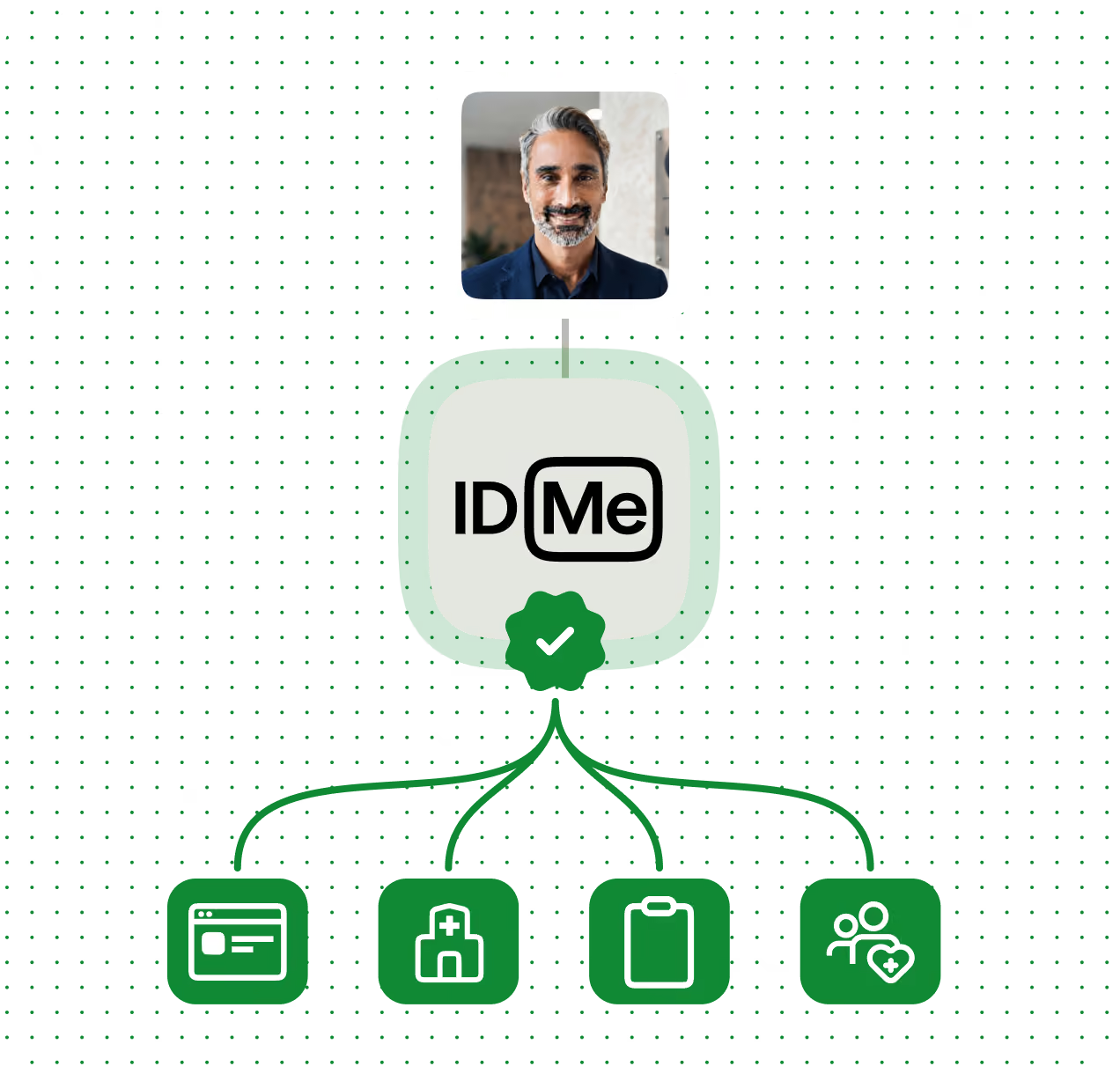


Add IDMe to portal enrollment, account recovery, medical-record requests, and patient-matching workflows through APIs and supported integrations.
New patients establish a high-assurance identity, while returning users sign in with an existing IDMe credential. Layered defenses help legitimate patients through while catching fraud.
Patients see what information the organization requests and approve what they share in that interaction.
Verified identity help organizations connect patients to the right account and records, reducing repeated verification and manual review.
Integrate IDMe with provider onboarding, credentialing, EPCS, e-prescribing, claims, and telehealth workflows.
Providers complete high-assurance identity verification when registering for NBME exams, then reuse that credential throughout their career.
Pair the provider’s verified identity with professional information, such as NPI, DEA registration, state licensure, or exclusions screening.
Providers can use the same credential across connected clinical and administrative systems without repeating the full process.
“By embedding IDMe into the request process, we are helping healthcare organizations confirm that records reach the right person while reducing unnecessary friction for patients.”
“Being able to verify identity within the iPrescribe app, without a lengthy and complicated process, means that clinicians can prescribe faster and easier than before.”

“Having IDMe as our identity-proofing layer is essential for protecting PHI.”

IDMe is a reusable digital identity layer that healthcare organizations use to verify patients, providers, and employees during high-risk interactions, including hiring, account recovery, patient registration, medical record access, and provider credentialing. Instead of building separate verification for each workflow, organizations accept one IDMe credential across every connected system.
IDMe brings unmatched scale and reach: About 70% of people accessing a healthcare organization for the first time are already verified and simply reuse a credential they own. For everyone else, IDMe offers multiple verification pathways — self-service, live video chat, and in-person verification — reaching populations automated-only tools often miss, like older adults and rural communities.
Yes. IDMe offers self-service, live video chat (24/7, 240+ languages), and in-person verification at 700+ locations for patients automated-only tools can't reach. Lowest-income users pass automated-only checks at 32%; video chat lifts that to 81%.
IAM and SSO platforms manage authentication and access after an account has been established. IDMe adds identity proofing—helping confirm that the person creating, accessing, or recovering an account is who they claim to be—and works alongside existing systems through APIs and supported integrations.
No more than a patient explicitly authorizes. IDMe shows users exactly what verified information an organization is requesting and requires their consent before sharing it, limiting each exchange to only the information required for that specific interaction.